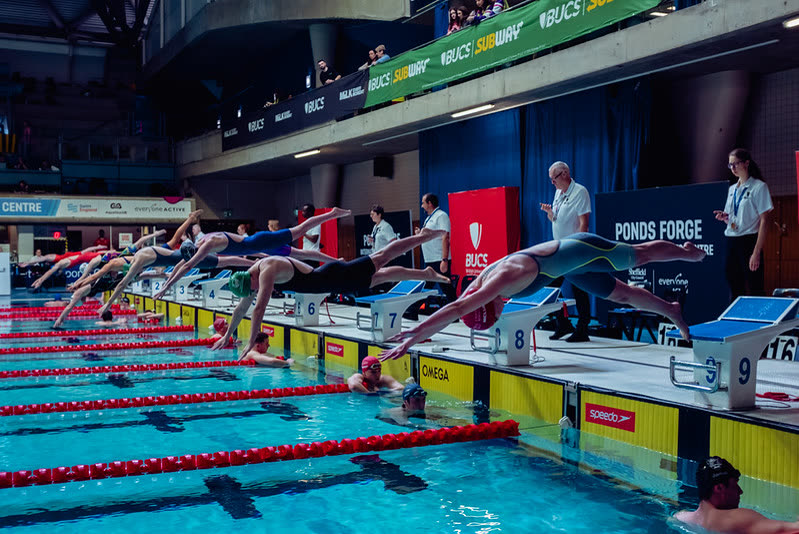
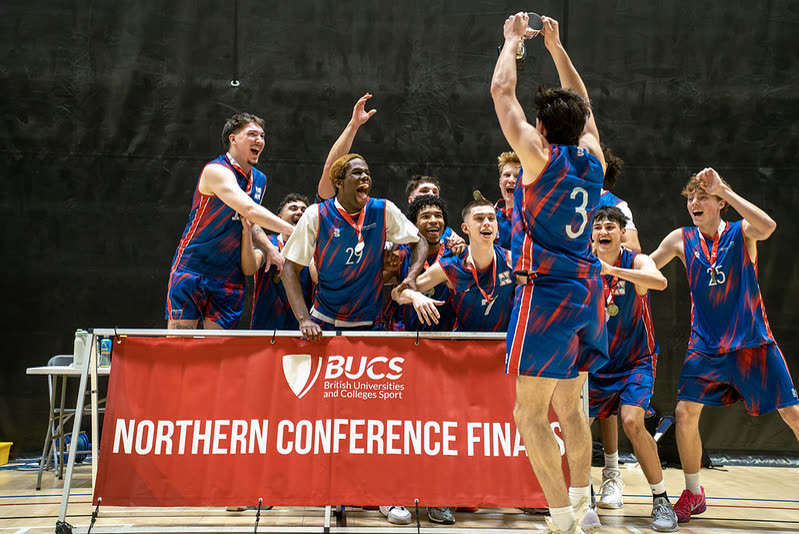
Your final college season is approaching. You still love training, competing, and being part of a team. But without a Division 1 résumé or another year of NCAA eligibility, you might assume your options end at graduation.
Can D3 athletes play overseas? Yes. Division 3 graduates can compete for UK university teams while studying for a master's degree, provided they meet academic admissions requirements, BUCS eligibility rules, and the team's playing standard.
You do not need a D1 scholarship background to have something valuable to offer. A strong D3 or NAIA starter with competitive experience, good academics, and the right attitude can be a credible candidate.
The goal is finding a university where your degree, sporting ambitions, and budget fit together.
Why UK university sport creates opportunities for D3 athletes
British Universities & Colleges Sport, known as BUCS, operates differently from the NCAA. Its team competitions use league tiers with promotion and relegation, rather than permanent NCAA-style divisions. Teams can move between levels according to results and competition rules.
That creates a range of competitive environments. Your NCAA division alone cannot tell a UK coach where you belong.
Premier competition is only part of the picture
In sports such as basketball, the structure includes Premier North and South, followed by regional Tier 1, Tier 2, Tier 3, and further tiers where available. The exact pyramid depends on the sport, region, and season; it does not universally stop at Tier 3.
For a D3 athlete, the practical implication is encouraging: there are multiple levels to assess.
An experienced starter might suit a demanding first-team environment. Another athlete might find better development and meaningful minutes elsewhere. Neither outcome can be determined by translating "D3" into a fixed BUCS tier.
Coaches need to see your actual standard, position, and potential contribution.
Can you compete after your NCAA eligibility expires?
Yes. Exhausting your NCAA eligibility does not automatically prevent you from competing in BUCS. Its general eligibility rules do not impose an NCAA-style four-season participation cap or maximum age. They do set minimum ages and student-registration requirements.
For playing college sports in the UK after D3, that distinction matters. You may have finished your US college career without having finished your university sporting career.
You must still meet the relevant requirements, including:
- Registration at an eligible BUCS member institution.
- A qualifying course and minimum study load.
- Payment of the required athletic union or equivalent subscription.
- Applicable sport-specific and governing-body rules.
Your university should confirm your circumstances before you commit. Academic admission, competition eligibility, and team selection are separate decisions.
What UK coaches need to see
A D3 résumé gives a coach useful context. Film and evidence show what you can contribute now.
Competitive experience with clear context
Your athletic CV should include your university, conference, position, seasons played, starts, minutes, statistics, and relevant honors. Add a coach reference and explain any significant injury gaps.
Make statistics easy to interpret. Ten points per game means more when a basketball coach also knows your minutes, shooting percentages, defensive responsibilities, and level of opposition.
Leadership matters too. Captaining a team, handling difficult assignments, and maintaining consistent training habits help explain your value beyond a highlight reel.
Film that shows repeatable skills
For a D3 to overseas basketball move, show more than scoring. Include decision-making, defensive positioning, movement without the ball, rebounding, and possessions against strong opposition.
A practical submission includes:
- A clearly labeled highlight video.
- Your jersey number and position.
- Links to recent full games.
- Current statistics and your coach's contact details.
These are preparation recommendations, rather than universal BUCS recruiting requirements. Individual coaches may request different material.
Your college division is the starting point of your profile. Your ability, academics, and ambitions determine the conversation.
How a 3.0 GPA strengthens your options
A coach's interest cannot replace admission to a master's program. Your academic record needs to support the move.
A GPA of 3.0 or above is a useful starting point, although it is not a universal UK admissions threshold. For example, the University of South Wales considers relevant accredited bachelor's degrees with a GPA of at least 3.0 for master's entry. Other universities and courses set different requirements.
Competitive experience and academic standing work together: one supports your sporting assessment; the other supports admission.
Prepare your transcript, expected graduation date, intended subject, personal statement, and references. Some programs require specific undergraduate coursework, a portfolio, or additional evidence of English proficiency.
If your GPA is below 3.0, investigate individual course requirements before ruling yourself out. Equally, a GPA above 3.0 does not guarantee entry to every program.
Why the one-year master's matters
Many full-time UK taught master's degrees take one year to complete. That lets you pursue postgraduate education and another university sporting season within the same period.
Compared with a two-year US graduate program, the shorter structure can remove a second year of tuition and living expenses. It may also let you return to full-time employment sooner.
However, compare actual programs. Some US degrees take one year, some UK courses take longer, and costs vary considerably.
A one-year degree is intensive. Teaching, assessments, training, and competition can overlap, while dissertation work may continue through summer. Your academic year can extend beyond your team's season.
Choose a subject that advances your career as well as a team that advances your sport.
What scholarships and funding realistically cover
Start with a partial-funding budget. Treat a full ride as an exceptional outcome.
UK sports awards vary: some reduce tuition, while others provide cash or athletic services. Brighton, for example, advertises international sports fee-waiver bursaries of up to £5,000 for selected athletes. Bournemouth offers sports scholarships of up to £5,000 toward specified sporting costs and support. Those are different benefits.
Where offered, support may include strength and conditioning, physiotherapy, gym access, kit, or competition travel. Confirm exactly what your package includes.
For illustration, a £4,000 tuition waiver against a £20,000 fee leaves £16,000 in tuition. Accommodation, food, flights, visa costs, and other expenses remain separate.
Eligible US students may access federal Direct Loans at participating UK universities, subject to school, course, and borrower eligibility. New graduate students generally cannot use Grad PLUS Loans from July 1, 2026; limited exceptions apply to qualifying continuing borrowers. Verify your funding with the university before accepting an offer.
FAQs: D3 athletes and overseas university sport
Can D3 athletes play overseas without professional experience?
Yes. UK university sport offers a route for student-athletes, including D3 graduates, without requiring professional experience. You need admission to a qualifying course, competition eligibility, and selection by the team. A university place does not guarantee a roster spot.
What BUCS level is equivalent to NCAA Division 3?
There is no official one-to-one equivalence. D3 standards vary, as do BUCS teams and leagues. Coaches assess film, statistics, position, experience, and roster needs to judge fit rather than assigning every D3 athlete to the same tier.
Can D3 graduates receive UK sports scholarships?
Yes, where they meet the university's award criteria. D3 status alone neither guarantees nor rules out funding. Scholarships may provide tuition discounts, cash, or athletic support, and selection can be more competitive than team recruitment.
Do you need remaining NCAA eligibility to play in the UK?
No. Remaining NCAA eligibility is not a general requirement for domestic BUCS competition. You must satisfy BUCS student eligibility rules and any applicable sport-specific requirements. The university should verify your eligibility before you commit.
Your next season starts with the right fit
Founded by Lucy Pandit, Athlete Futures Abroad helps student-athletes explore a future that combines continued competition with postgraduate study.
For Division 3 athletes, an overseas master's deserves serious consideration. Your experience has value. The next step is understanding where that experience fits alongside your academic goals and finances.
Your next season starts with the right fit
Complete your Athlete Futures Abroad profile with your sporting background, academic record, video and preferred subject so your options can be assessed.