.png)

What Graduating Players From Teams Like the Indiana Hoosiers and Oregon Ducks Do Next
What comes after college football for graduating players from teams like Indiana and Oregon, including overseas university pathways.

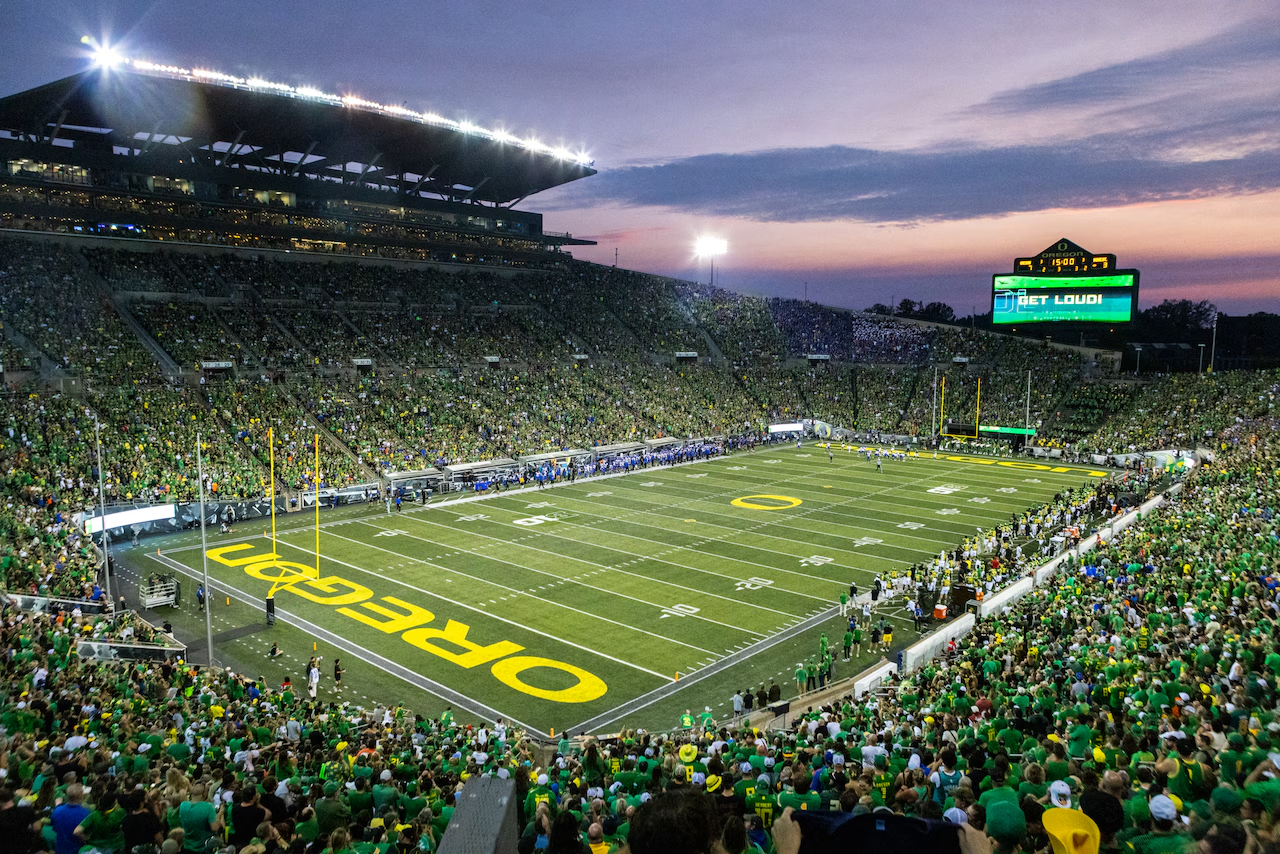
As the College Football Playoffs bring teams like the Indiana Hoosiers and the Oregon Ducks into the national spotlight, it’s easy to focus on the excitement, exposure, and the small group of players whose careers may continue at the professional level.
But behind every playoff run are graduating players whose eligibility is ending and whose next step won’t be the NFL.
For those athletes, the biggest question isn’t about the next game.
It’s about what comes after college football.
The Reality for Most College Football Players
Playoff teams showcase the very top of college football, but the professional pathway remains extremely narrow.
Most graduating players, even from top programmes like Indiana and Oregon, will:
- Exhaust their NCAA eligibility
- Not sign a professional contract
- Need to transition quickly into life after college sport
That transition can feel sudden after years of structure, training schedules, and team environments.
What many athletes don’t realise is that college football doesn’t have to be the end of competitive football.
What Are the Options When Eligibility Ends?
For players finishing their college careers without a pro contract, there are several realistic pathways worth understanding.
Entering the Workforce
Some athletes move straight into careers, using their degree and the transferable skills gained through football.
This can be a strong option, but it often means stepping away from competitive sport entirely.
Graduate School in the U.S.
Pursuing graduate school domestically allows academic progression, but NCAA eligibility rules mean football participation is no longer an option for most players.
For athletes who still want football to be part of their routine, this can feel like a hard stop.
Graduate School Abroad With Continued Football
One pathway many graduating players are never told about is graduate school abroad.
Outside the United States, eligibility rules are different. In countries such as the UK:
- NCAA eligibility restrictions do not apply
- Graduate students can compete at university level
- American football programmes exist within university sport systems
This creates an opportunity for players to continue competing while earning a master’s degree overseas.
American Football Is Growing Overseas
American football continues to grow internationally, particularly within university systems.
For former college players, including those coming from Power Five programmes, this can offer:
- Structured training and competition
- A team environment similar to college football
- The chance to keep playing while studying
- Exposure to football in an international setting
For many athletes, this pathway provides continuity rather than an abrupt end to their playing career.
Why This Option Appeals to Graduating Players
Graduate school abroad can be a strong fit for players who:
- Are not ready to stop competing
- Want to earn a postgraduate degree
- Value structure and routine after college
- Want a clear, time-bound next step
Most UK master’s degrees take one year, making this a focused and efficient option during a major transition point.
What This Pathway Is (and Isn’t)
It’s important to be clear about expectations.
This is a university-based pathway that combines education and competition.
It is not a professional placement or an agent-led route into pro football.
For some athletes, it supports long-term ambitions. For others, it simply provides the opportunity to keep playing while preparing for life beyond sport.
How Athlete Futures Abroad Helps
Athlete Futures Abroad works specifically with athletes exploring university-based opportunities overseas, including American football.
All support provided to athletes is free to the athlete and funded by partner universities in the UK and abroad.
We help by:
- Reviewing academic and football backgrounds
- Identifying universities that recruit international football players
- Explaining how graduate study and university sport work together
- Helping athletes understand realistic next steps
Our role is to provide clarity at a key transition moment.
Thinking About What Comes Next?
As the College Football Playoffs spotlight teams like the Indiana Hoosiers and Oregon Ducks, they also highlight a reality many athletes soon face.
What comes after college football?
If you’re approaching the end of eligibility and want to understand your options, the next step is learning which pathways actually exist for you.
👉 Complete your recruiting profile to explore university-based football opportunities abroad
.png)
.png)
.png)
.png)
