The conversation after Senior Night
If you work in student-athlete development, you'll know this meeting well. Senior Night has been and gone, the eligibility clock has run out, and the athlete across the desk is trying to work out who they are without their sport. Some are ready for a job or grad school at home. Plenty aren't. They still have real competitive fire, and nobody has told them there's somewhere to use it.
I've spent more than 12 years helping NCAA and NAIA athletes in that position, from Olympians to walk-ons, go on to a master's degree abroad and keep playing. This piece is for the advisors who sit in those meetings. It explains the option in plain terms and gives you something you can pass on in a couple of minutes.
Why used-up eligibility isn't the end abroad
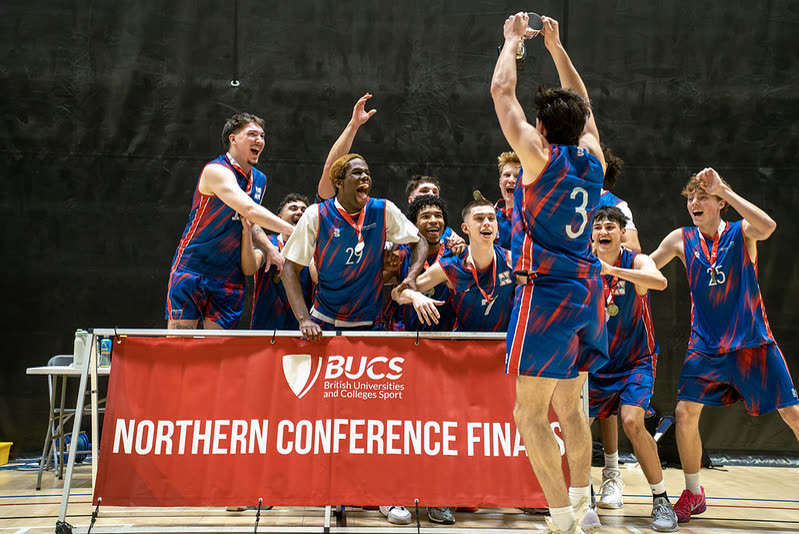
University sport in the UK runs through BUCS, and in Australia through UniSport. Neither works on the NCAA's season clock. So four years of college competition don't, on their own, stop a graduate from playing for a university team overseas. Each university confirms its own rules, but for most of the athletes I work with, the door is very much open.
The degrees are short, too. Many UK master's take 12 months, which means a senior can finish a qualification, train in excellent facilities and play a full season in the time a US programme would take to get going. Some universities also offer partial scholarships, bursaries, coaching, strength and conditioning, and physio support.
What to say in an exit meeting
You don't need to become an expert in international admissions. One question is enough:
"Would you be interested in a master's degree overseas where you could keep playing your sport?"
If their face lights up, send them the email below. Copy it, add their name, and you're done.
What happens after you share the link
The athlete fills in a short profile, which takes about a minute. I read it, look at their sport, level and goals, and share it with UK and Australian coaches whose programmes are a genuine fit. When a coach is interested, I introduce them to each other personally by email. From there, we help with applications, funding questions and the practicalities of moving abroad.
Nothing lands back on your desk. There are no referral fees, no forms for your department and no follow-up asks.
A few honest caveats
Universities make their own decisions on admission, scholarships, eligibility and team selection, so an introduction is a strong start, not a guaranteed place. Scholarship support varies and is never promised in advance.
On money: eligible US students can often use federal Direct Loans at participating overseas universities (up to $20,500 a year for most new graduate borrowers), though Grad PLUS largely closed to new borrowers on 1 July 2026. Many programmes don't ask for the GRE, though some do. And anyone heading into a licensed US profession should check that the degree will count at home before committing.
Share one link at senior exit meetings
Bookmark the profile link and share it with any graduating athlete who wants to keep competing. We take the conversation forward with them, free of charge.