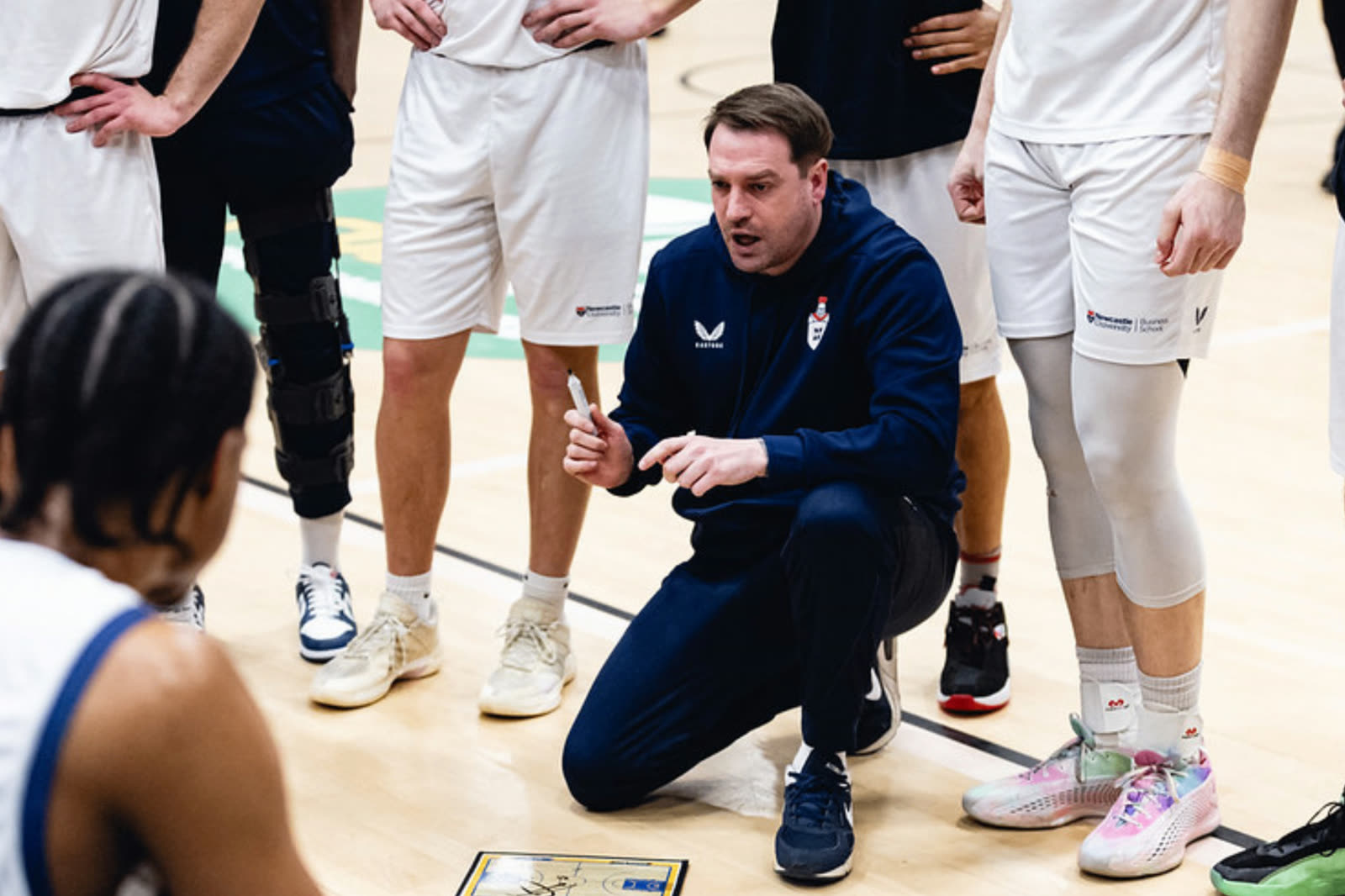

The NCAA and UK university sport both let students combine a degree with competition, but they are not the same system. NCAA athletics is division-based and highly regulated, with recruiting, athletic aid, and team services often closely coordinated. In the UK, BUCS organizes much inter-university competition, while admission, coach recruitment, scholarships, and athlete support may be separate processes. The better route depends on your level, academic goals, budget, preferred structure, and future eligibility plans.
For an American athlete, the most important question is not “Which country has better college sports?” It is “Which specific university gives me the right academic course, competitive level, support, cost, and pathway?”
In this guide, “UK” means the United Kingdom, not the University of Kentucky. Rules and examples were checked on July 28, 2026. Because NCAA, BUCS, university, and immigration policies can change, verify any decision with the relevant official source before enrolling.
NCAA vs. UK University Sport at a Glance
The systems overlap in purpose but differ in structure. The NCAA is an athletics association with divisional rules and a deeply established recruiting model. British Universities & Colleges Sport (BUCS) organizes leagues, knockouts, championships, and events for member institutions, but it does not perform every function that an American family may associate with the NCAA.
Governing model and competition structure
- NCAA: a division-based association whose rules are administered through member schools and conferences, with divisions, conferences, regular seasons and championships.
- UK: BUCS organizes much of inter-university competition, while universities, athletic unions, performance programs, clubs and sport governing bodies share responsibility. Standards vary by university, team and sport.
Recruitment and admission
- NCAA: coaches commonly lead recruiting within NCAA rules and school processes, and admission and athletics recruitment may be closely coordinated — though institutional admission still applies.
- UK: athletes often contact coaches or performance staff directly and the process is less standardized. Academic admission, coach interest, roster opportunity and scholarship are usually separate decisions.
Funding and eligibility
- NCAA: athletics aid may cover part or all of certain costs, depending on division, sport, school and award. Division-specific eligibility rules apply, and Division I adopted an age-based model in June 2026 with transition rules.
- UK: sports awards may be cash, a tuition reduction, or services — full-cost awards should never be assumed. BUCS general rules focus on registration, course level and load, age, subscriptions and sport governing-body permission, with sport-specific rules on top.
Training, degrees and postgraduate routes
- NCAA: training can be highly structured, particularly in well-resourced programs. A bachelor's degree is commonly designed around four years and may include general education.
- UK: support varies widely — some performance programs are intensive, while other teams require more independent training and time management. A standard bachelor's degree is usually three years in most of the UK and four in Scotland, with earlier subject specialization.
- Graduate route: NCAA graduate eligibility depends on remaining eligibility and applicable rules; many UK taught master's degrees are one year, creating a distinct option for graduates who meet BUCS and sport-specific requirements.
External clubs, media and paid activity
- NCAA: outside competition is shaped by NCAA, school and sport rules; environments range from modest to highly commercial and nationally televised; NIL activity is governed by current NCAA, school, conference and other applicable rules.
- UK: university and external amateur-club competition may be possible in some sports, subject to governing-body, university and visa rules. University sport is usually less commercial, though particular teams, rivalries and championships may attract significant attention. UK immigration, employment, tax, governing-body and university rules may all matter, and Student visa holders face specific restrictions.
Table sources and context: BUCS competition program; BUCS Regulation 4; NCAA Division I age-based eligibility guidance; NCAA scholarship guidance; UCAS degree-system guidance; and GOV.UK Student visa guidance.
Is BUCS the UK Equivalent of the NCAA?
BUCS is the closest national comparison, but calling it “the British NCAA” without explanation is misleading. BUCS brings universities together for organized competition. Its current league-and-knockout program includes national and premier leagues, regional conference leagues, and several knockout formats across multiple sports. Competition ranges from local participation to national performance.
The key difference is that UK university sport operates as an ecosystem. BUCS runs competitions; the university or its athletic union manages clubs; a performance-sport department may select and support leading athletes; and a national governing body sets sport-specific rules. In some sports, a community, amateur, or professional club system also sits alongside the university pathway.
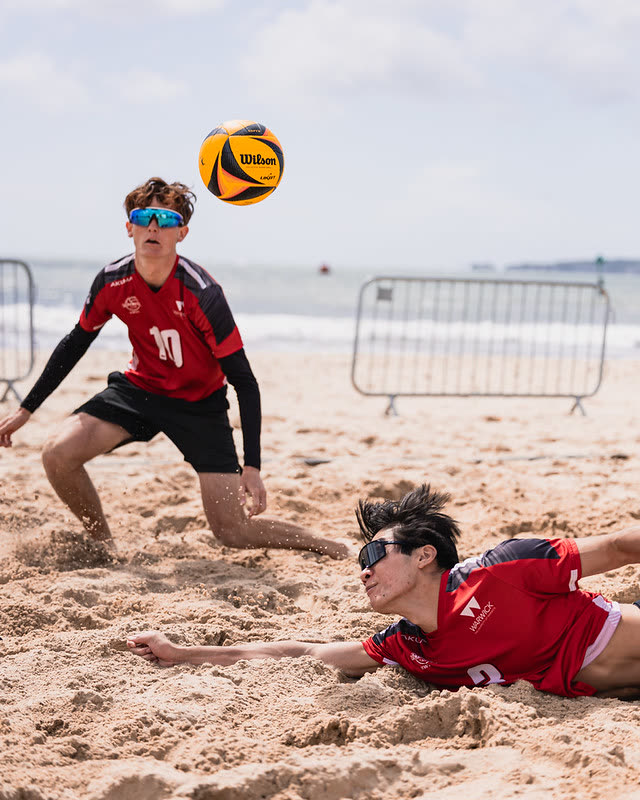
Four UK terms worth knowing
- BUCS: British Universities & Colleges Sport, the national body that organizes much higher-education competition in the UK.
- Athletic union: the university organization that oversees student sports clubs. It is not a labor union.
- Performance program: enhanced coaching and athlete services for selected sports or athletes. Entry and benefits vary by university.
- Varsity: in UK usage, this often means a rivalry event between universities, not simply the top team.
How Competitive Is UK University Sport?
There is no reliable universal formula such as “BUCS Premier equals NCAA Division I.” Standards vary too much by sport, university, team, gender category, roster, and year. A leading UK program in one sport may offer international-caliber athletes, specialist coaching, sports science, and high-quality facilities. Another university in the same sport may be primarily student-led and participation-focused.
The right comparison is team by team. Review recent results, the standard of opposition, current roster profiles, training volume, coaching credentials, selection criteria, and the athlete's realistic role. A league label alone does not tell you whether the environment fits your level.
University and external-club competition
In many sports, students may be able to represent their university and an external amateur club during the same academic year. That can create more competition, a longer playing calendar, or access to a different development pathway. It is not automatic. BUCS Regulation 4 requires permission from the relevant international or national governing body to compete in BUCS alongside other competition, and sport-specific rules may add requirements.
Eligibility: NCAA and BUCS Rules Are Different
Eligibility is one of the most consequential parts of this decision because the answer can depend on your course, enrollment history, sport, age, and future plans. A coach's willingness to recruit you does not establish your eligibility.
Current BUCS general eligibility
At the review date, BUCS Regulation 4 generally requires an athlete to be registered at an eligible member institution, meet the age requirement, study at or above specified course levels, undertake a minimum study load, receive any required governing-body permission, and pay the relevant athletic-union or equivalent subscription. The regulation also contains special cases, including provisions relating to course completion, placements, study abroad, and certain suspensions.
Prior NCAA, NAIA, or junior-college participation is not a substitute for this review. Do not assume that exhausted NCAA eligibility makes you ineligible for BUCS, or that remaining NCAA eligibility automatically makes you eligible. The university should confirm the current BUCS position and any sport-specific or governing-body conditions.
Timing note: the published Regulation 4 used for this guide is dated September 8, 2025. Because the 2025-26 BUCS season ends on July 31, families considering 2026-27 participation should re-check the new season's regulations when published.
The NCAA Division I rule changed in June 2026
NCAA Division I adopted an age-based eligibility model in June 2026. Under the NCAA's current explanation, the five-year eligibility period begins at the earlier of initial full-time enrollment at any college or university — including an international university or junior college — or the age-based trigger tied to the academic year after the athlete's 19th birthday. Once it starts, the period runs continuously.
This matters if you enroll full time in the UK and might later want to compete in NCAA Division I. Time abroad does not simply pause the Division I eligibility period. Other academic and athletics eligibility requirements still apply, so being within the five-year period does not by itself make someone eligible.
Transition rules apply. Current student-athletes with eligibility remaining after 2025-26, and prospects who first enroll full time during 2026-27, are reviewed under the previous rules or the new age-based model, whichever is more favorable. Prospects who first enroll full time in fall 2027 or later use the age-based model only. The NCAA also says the new model does not guarantee five years to every athlete.
If a future NCAA return is possible, obtain written guidance from the relevant NCAA compliance office and use the NCAA Eligibility Center before committing to full-time UK enrollment. The June 2026 change described here is a Division I rule; do not assume it applies identically to Divisions II or III.
Recruitment and Admission: Four Separate Decisions
In the NCAA, recruiting, admissions support, roster planning, and financial aid may feel like one coordinated process. In the UK, families should treat them as four separate decisions until each is confirmed.
- Academic admission: a formal university offer for the degree course.
- Roster opportunity: written clarification of the team, trial, selection process, or expected role.
- Scholarship or support award: written confirmation of the value and type of support.
- Conditions: academic, athletic, conduct, renewal, and deadline requirements attached to the offer.
A positive conversation with a coach is encouraging, but it is not an admission offer, a guaranteed roster place, or a scholarship. Athlete Futures Abroad generally recommends starting meaningful conversations around 12 months before enrollment, especially when the athlete needs time to compare courses, submit an application, secure funding, arrange housing, and complete the visa process.
What UK coaches usually want to see
The most useful evidence depends on the sport, but UK coaches commonly want current proof of level rather than potential alone. Athlete Futures Abroad recommends preparing:
- Recent game footage or a highlight video that accurately represents current ability.
- Full-game, full-match, or full-race footage when the sport makes this useful.
- Verified statistics and performance data.
- Rankings, times, distances, scores, or other measurable indicators.
- Competition history and the standard of opposition.
- A coach reference when appropriate.
- An athletic résumé that clearly identifies dates, teams, positions or events, results, awards, and contact information.
For undergraduate applications, the academic application remains central. UCAS now structures the personal statement for 2026 entry onward around three questions covering motivation for the course, academic preparation, and preparation outside formal education. Sport can be relevant, but the application must still explain academic fit.

Scholarships: Compare Net Cost, Not the Headline Award
The word “scholarship” does not always describe the same product. In the NCAA, athletics aid can contribute to tuition, fees, room, board, and course-related books, but the NCAA states that most student-athletes receive partial aid rather than a full ride. Division III schools do not offer athletics scholarships.
At a UK university, a sports scholarship may mean cash funding, a tuition discount, a bursary, access to specialist services, or a package combining several forms of support. The label alone does not show the real value. Strength and conditioning, sports science, physiotherapy, sports medicine, nutrition, performance-lifestyle support, academic flexibility, coaching, and specialist facilities may be valuable — but only if they are actually included, accessible, and relevant to your sport.
Some services may be worth more to an athlete over several years than a small cash award. Conversely, a prestigious-sounding package may have limited financial value if international tuition, accommodation, or required sports costs remain high.
Build a family net-cost comparison
For every university, calculate the same items:
- International tuition after confirmed academic and sports awards.
- Accommodation, food, local transportation, and personal expenses.
- Visa and immigration-related costs, including any applicable healthcare surcharge.
- Athletic-union or sports-club membership fees.
- Training, competition, equipment, kit, facility, and travel costs not covered by the program.
- Travel between the United States and the UK.
- The total length of the degree, including placements, foundation years, or study-abroad years.
- Scholarship duration, renewal rules, performance conditions, and what happens after injury or a coaching change.
- The realistic value of in-kind services you would otherwise pay for.
The best financial decision is based on total net cost and confirmed support, not the headline scholarship amount.
Daily Life: Structure, Support, and Independence
The everyday experience can differ as much between two UK universities as between the UK and the United States. Do not assume that every UK program is less demanding, or that every NCAA program provides the same level of support.
What often surprises American athletes
- Some UK programs schedule fewer team-controlled training hours than an NCAA athlete expects, leaving more personal responsibility for strength and conditioning.
- Many sports have competition spread across more of the academic year rather than one short, tightly controlled season.
- In some sports, students may be able to compete for both the university and an external amateur club, subject to sport and visa rules.
- Coaches may expect athletes to manage their own schedules, recovery, communication, and academic commitments with less day-to-day oversight.
- The adjustment that requires the most support is often not the sport. Students may need more help understanding the academic system, settling into accommodation, using public transport, handling practical administration, building a social network, and managing homesickness.
These are patterns, not universal rules. A leading performance program may provide intensive training and extensive support; a student-led club may provide very little. Ask for a sample week in season and out of season, and speak to a current athlete in the same team or scholarship tier.
Support services to verify
- Who provides coaching, and how many coached sessions occur each week?
- Is strength and conditioning individual, team-based, supervised, or self-directed?
- Which athletes can access physiotherapy, sports medicine, nutrition, psychology, and sports science?
- Are treatment and rehabilitation included, subsidized, or charged separately?
- What academic flexibility exists when competition clashes with classes or assessments?
- Which facilities are guaranteed, and which depend on availability?
- Who pays for travel, competition entry, equipment, uniforms, and external-club costs?
Academic Differences Matter as Much as Sport
A UK degree is not simply an American degree in another country. UCAS explains that a standard bachelor's degree is normally three years in most of the UK and four years in Scotland. UK courses are usually focused on the chosen subject and do not typically include the same general-education structure familiar to many US students. Exceptions include foundation years, placements, study abroad, integrated courses, and longer professional degrees.
This earlier specialization can be attractive if you already know what you want to study. It can be restrictive if you want time to explore unrelated subjects or change direction. Review the actual modules, assessment methods, contact hours, professional accreditation, placement options, and rules for changing courses.
For graduates, the UK offers a particularly distinctive option: UCAS says a master's degree is typically one year, or three semesters. That can allow an athlete who already has a bachelor's degree to pursue an advanced qualification and compete in university sport, provided the athlete meets BUCS, university, and sport-specific requirements.
A one-year master's degree can be a strong route for an NCAA, NAIA, or junior-college graduate — but only when the academic course, playing level, funding, and eligibility all fit. Do not select a degree solely to extend an athletic career.
Student Visas, Paid Sport, and NIL
International students must treat sports work and commercial activity carefully. GOV.UK's Student visa overview states that Student visa holders cannot work as professional sportspeople or sports coaches and generally cannot be self-employed. Home Office sponsor guidance defines professional sportsperson broadly and can include playing or coaching at a professional or semi-professional level whether paid or unpaid.
This means a team's “semi-professional” label can matter even if the athlete is unpaid. It also means paid coaching, camps, sponsorships, monetized content, endorsements, and other NIL-style activity should not be treated as automatically permitted. The analysis may depend on the activity, payment structure, visa conditions, tax position, sport rules, and university policy.
In many sports, a Student visa holder may be able to represent the university and an external amateur club. Before joining a club or accepting any payment, ask the university's international-student team to confirm the position and seek qualified immigration advice when necessary.
Do not accept paid, professional, semi-professional, coaching, or self-employed sports activity on the assumption that ordinary student work hours make it permissible. This section is general information, not legal advice.
Which System Is the Better Fit?
Neither system is automatically better. The decision should reflect what you want from the next academic and athletic stage.
- Highly structured athletics: the NCAA may fit if you want team-controlled training, frequent oversight and a program where sport shapes much of the weekly schedule. A UK university can fit when you have identified a specific performance program that provides that structure.
- Greater independence: the NCAA fits when you are comfortable with the program's expectations and support model. The UK may fit when you want more responsibility for organizing training, recovery, academics and life outside sport.
- Large college-sports environment: choose the NCAA when crowds, media, conference identity and a commercial game-day atmosphere are priorities; choose the UK when academic fit, international experience and the right sport environment matter more than scale or spectacle.
- One-year graduate degree: the NCAA fits when you have remaining eligibility and a suitable graduate program; the UK fits when you already hold a bachelor's degree and a one-year master's aligns with your academic and athletic goals.
- Major financial support: compare a written NCAA financial-aid package against confirmed UK tuition awards, academic funding, sport support and shorter degree duration — whichever produces the stronger total-cost outcome.
- University plus club pathway: possible in the NCAA when NCAA, school and sport rules permit the outside activity; possible in the UK when your sport supports a university-and-amateur-club pathway and your visa conditions permit it.
- Possible NCAA return: preserve the pathway through early compliance advice and written eligibility review, and understand that full-time UK enrollment can affect an NCAA Division I eligibility period.
How to Compare UK Universities
Use the same checklist for every university. A famous institution with the wrong course, team level, or support model is not a good match.
- Academic course, modules, entry requirements, assessment style, and professional recognition.
- Team level, recent results, standard of opposition, and current roster need.
- Selection or trial process and the athlete's realistic role.
- Coach qualifications, employment status, and continuity.
- Weekly team training, individual training, S&C, and recovery expectations.
- Access to facilities, physiotherapy, sports medicine, nutrition, psychology, and sports science.
- Scholarship amount or services, written conditions, duration, and renewal.
- International tuition and total living cost after all confirmed awards.
- Competition travel, equipment, uniform, club, and athletic-union costs.
- Academic flexibility for travel, training, and assessment conflicts.
- Current BUCS, sport governing-body, and university eligibility.
- Student visa implications for external clubs, coaching, paid sport, and commercial activity.
- Accommodation, transport, campus setting, wellbeing, career support, and life outside sport.
Questions that reveal the right environment
- How many hours each week do you want to dedicate to your sport?
- Is competing at the highest possible level your priority?
- How important is flexibility around academics?
- Would you enjoy managing more of your own training?
- Do you want to compete for an external club as well as your university?
- Is a one-year master's degree attractive?
- Are you looking for a balanced student experience or a highly structured athletic environment?
What to get in writing
Before paying a deposit or making an enrollment decision, ask the university to put the material details in writing. That includes the academic offer, any scholarship and its conditions, the selection or roster process, and the specific athlete services attached to your award or performance tier. If wording is vague, request clarification rather than assuming the most favorable interpretation.
Next Steps for American Athletes
A disciplined process makes this comparison manageable. Start early enough to assess academics and sport together rather than solving one after the other.
- Define your non-negotiables. List your preferred subject, study level, budget range, competitive goals, desired training structure, and location preferences.
- Build an evidence file. Prepare transcripts, an athletic résumé, recent film or verified performance data, competition history, and coach references.
- Identify realistic programs. Compare the course and team together. Do not shortlist a university only because it offers your sport.
- Contact the right people. Reach out to the coach or performance-sport department and the international admissions team. Ask specific questions about selection, support, and timing.
- Verify eligibility early. If you have NCAA history or may return to the NCAA, obtain written compliance guidance before full-time enrollment. Confirm BUCS and sport-specific eligibility with the UK institution.
- Compare written net prices. Include tuition, housing, living costs, travel, visa costs, sport expenses, and the true value of included services.
- Separate every confirmation. Do not merge coach interest, admission, roster opportunity, scholarship, and visa permission into one assumed offer.
- Plan the transition. Prepare for academic expectations, accommodation, banking, transportation, communication, social life, and homesickness as deliberately as you prepare for training.
Frequently Asked Questions
Can an American athlete compete for a UK university?
Often, yes. Eligibility depends on the institution, course, study load, age, athletic-union requirements, relevant governing body, sport-specific rules, and any university selection process. Ask the university to confirm the current position in writing.
Can I play BUCS after exhausting NCAA eligibility?
Potentially. BUCS does not use the same eligibility model as the NCAA, so exhausted NCAA eligibility is not by itself a complete answer. The university must review BUCS Regulation 4 and the rules for your sport and circumstances.
Is BUCS as competitive as the NCAA?
There is no universal comparison. UK standards range from participation teams to high-performance programs with international-level athletes. Compare the specific sport, team, roster, results, coaching, and training environment rather than using a division shortcut.
Do UK universities offer full athletic scholarships?
Some universities offer meaningful sports funding, but families should not assume a full-cost award. UK packages may include cash, fee reductions, bursaries, or services. Compare the written net cost after all academic and athletic support.
Does a UK coach control admission?
Not necessarily. A coach may support or inform the process, but academic admission is a separate university decision. Treat coach interest and a formal academic offer as distinct.
Can I compete during a one-year master's degree?
Many postgraduate students can compete, but eligibility is not automatic. Confirm the course load, university registration, BUCS rules, governing-body rules, and team selection before enrolling.
Will studying in the UK affect remaining NCAA eligibility?
It can. Under the NCAA Division I age-based model adopted in June 2026, initial full-time enrollment at an international university can start the continuous five-year eligibility period. Transition rules apply for current athletes and 2026-27 first-time enrollees. Seek written NCAA compliance guidance before enrolling.
Can an international student-athlete earn NIL income in the UK?
Do not assume so. Student visa holders generally cannot be self-employed or work as professional sportspeople or sports coaches, and professional or semi-professional sport can be defined broadly. Specific sponsorship, content, coaching, or endorsement activity may require immigration, tax, sport, and university advice.
The Bottom Line
UK university sport is not a smaller copy of the NCAA. It is a different system that can offer serious competition, recognized degrees, one-year graduate study, external-club pathways, and greater independence. Those benefits are meaningful only when the individual course, team, support, cost, eligibility, and visa position are verified.
Choose the university where your academic and athletic plans reinforce each other. Ask for evidence, compare net cost, get important commitments in writing, and treat eligibility and immigration as decisions to verify — not assumptions to make.
Authoritative Sources Reviewed
- BUCS: Our Programme — league and knockout structure; accessed July 28, 2026.
- BUCS Regulation 4: Individual Eligibility — published September 8, 2025; accessed July 28, 2026.
- NCAA: Division I Age-Based Eligibility Rules — current transition and five-year-period guidance; accessed July 28, 2026.
- NCAA: Division I Adopts Age-Based Eligibility Model — implementation announcement dated June 23, 2026.
- NCAA: Scholarships & Financial Aid — athletics-aid definitions and division context; accessed July 28, 2026.
- NCAA: Name, Image and Likeness — current NCAA NIL overview; accessed July 28, 2026.
- NCAA: Transfer Rules and Eligibility — current transfer resources; accessed July 28, 2026.
- UCAS: The UK Degree System — degree length and structure; accessed July 28, 2026.
- UCAS: Personal Statement for 2026 Entry Onward — current application structure; accessed July 28, 2026.
- GOV.UK: Student Visa — work, professional-sport, and self-employment restrictions; accessed July 28, 2026.
- Home Office: Student Sponsor Guidance – Sponsorship Duties — professional sportsperson definition and sponsor duties; updated June 1, 2026.
- Immigration Rules: Introduction — definition of professional sportsperson; accessed July 28, 2026.
Source policy: this article uses official NCAA, BUCS, UCAS, and UK government sources for rule-sensitive claims. Last reviewed: July 28, 2026.
Get a personalised UK university sport shortlist
Tell Athlete Futures Abroad your sport, academic level, competitive background, degree interests and budget. We can help you identify universities where the course, team and support structure align — without promising admission, selection, funding or eligibility.